
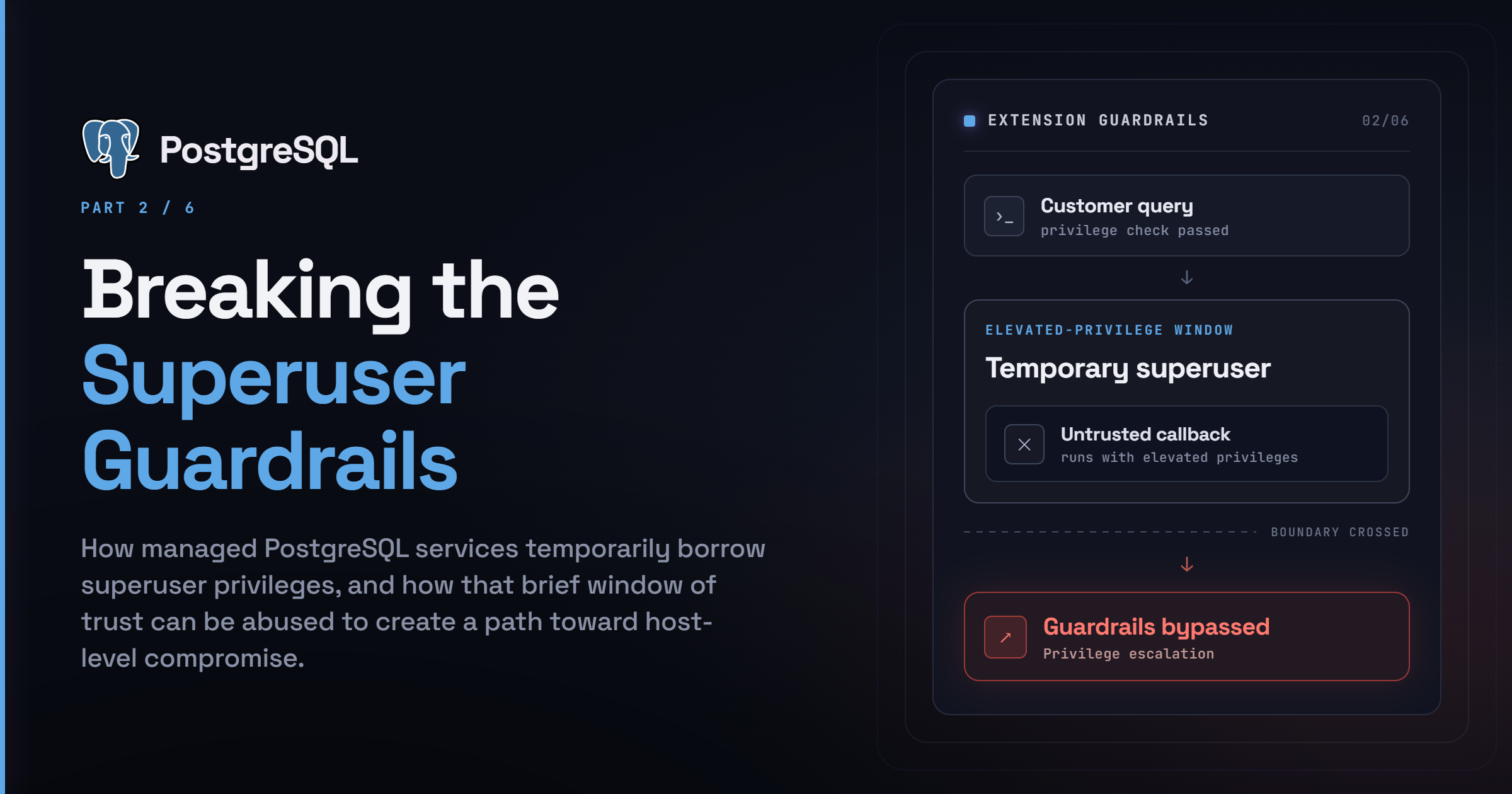
It’s been a month since I published the first part of this research, and interest from the Postgres community has been higher than I expected. Most vendors I contacted were shy to respond, so the Databricks team’s blog post Collaboration makes us all stronger was one of the first examples of a vendor publicly sharing their side of the story.
In the past four weeks, I spoke with managers of managed Postgres services, security engineers, and red teamers who look for new threats in the services they offer. Here’s what I learned from those conversations:
- None of them had monitoring in place for the shared-buffer-based superuser backdoor technique I described in my first article.
- Risks from extensions are just as serious as having a zero-day in PostgreSQL core, but no one seems to be focusing on them.
- Security hardening extensions are meant to stop hackers from attacking the underlying infrastructure and to keep users from misconfiguring their setup.
My initial plan was actually write about PostgreSQL core vulnerabilities but the coordinated work with the vendors takes longer than I expected. As the time flies and given that I only have a 40-minute talk at PGCONF.EU, there’s simply no way I’ll be able to cover everything I gathered in a single session. So I want to share all the things I wont be able to cover at the talk here as a blog post.
In this article you will see the vulnerabilities I have found on PostgreSQL vendors’ security hardening extensions and the broader threat model discussion.
(more…)